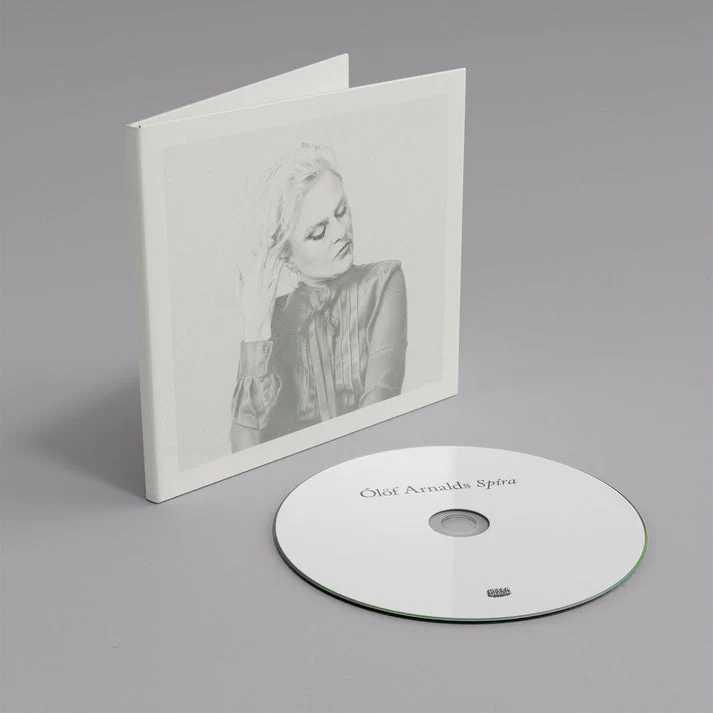
Olof Arnalds - Spira
Anyone who has paid attention to Icelandic music this century knows how Ólöf Arnalds can mesmerise a room with nothing but a small guitar and her distinctive soprano voice.
Across five albums in nearly twenty years, her gently plucked guitar, charango, violin and koto have provided the bedrock for vivid narrations straddling the mundane and mythological, sketching out rich emotional territories often concerned with love–equal parts familial, platonic and romantic.
The music evokes Joanna Newsom, Nico’s early solo albums and Vashti Bunyan but the deceptively simple arrangements and tightly braided melodies are, ultimately and unmistakably, very much her own.
Although a classically trained singer and violinist, Ólöf has been an active practitioner of popular music for thirty years.
When she joined múm in 2003, commanding attention on stage with a horned Stroh violin, she first became a fixture on the international scene.
But the watershed moment was the 2007 release of her debut solo album Við og við (Now and Again, wider international release in 2009), produced by Sigur Rós’ Kjartan Sveinsson.
It seemed to appear fully formed out of the ether, and became a local classic overnight, winning accolades such as ‘Best Alternative Album’ at the Iceland Music Awards, named ‘Record of the Year’ by Iceland’s principal daily newspaper and recognised as one of the decade’s 100 best albums by eMusic.
Ólöf’s consecutive albums featured guests such as Ragnar Kjartansson and Björk (who famously described Ólöf as “somewhere between a child and an old woman”) and were met with gushing praise from the press and audiences alike but by 2015 she found herself drifting towards other projects: founding the grassroots cultural space Mengi in Reykjavík, working as a copywriter, raising her son and step-daughter, and collaborating with her long-time friend (and now husband!) Skúli Sverrisson, for example on a piece written especially for Ólöf and the Icelandic Symphony Orchestra.
With her new album, Spíra (Sprout), Ólöf has found her joy in writing songs rekindled.
In many ways it harkens back to her debut: it is exclusively in Icelandic, the arrangements are markedly stripped back compared to her last two records, and it is mostly recorded in single takes in the control room of Sundlaugin, much like Við og við.
Spíra is produced by Skúli Sverrisson, who also contributes bass and guitar.
His mind-melting resumé includes musical direction for Laurie Anderson, recordings with Blonde Redhead and work with artists such as David Sylvian, Jon Hassell, Ryuichi Sakamoto, Bill Frisell and Arto Lindsay.
Davíð Þór Jónsson contributes piano and guitar to the record–much as he did during Ólöf’s busiest touring schedule nearly fifteen years ago when the two of them toured the world for months on end.
The trio – bound by a long history and immense trust – conjures towering images from sparse instrumentation and often understated lyrics.
Many of the songs deal in one way or another with the challenges of creativity itself and the joy it can bring.
Take “Úfinn sjór” (“Rough Waters”), an ode to the long winter darkness of Iceland.
For Ólöf, it doesn’t harbour doom and gloom like it does for so many, but becomes a place for solitary expression by candlelight where her head is finally clear and “the heart thaws / in a stream of words / in all the colours of the spectrum / like before.”
“Stein fyrir stein” (“Stone by stone”) is a song written for her uncle who stepped up to help take care of her and her sisters when her father passed away at 54.
It considers the healing power of nature and the wisdom gained from interacting with the natural world.
“Whether scaling a mountain or growing a tree, the important thing is to keep going, not looking back,” says Ólöf when asked about the song.
“My uncle showed tremendous strength when my father died.
The same goes for your relationships.
They must be cultivated, but it can only be done one step at a time, stone by stone, and you must keep your eyes on the peak.”
But looking ahead doesn’t mean forgetting the past.
It means accepting it and letting it shape your route forward.
On “Vorkoma” (“The Coming of Spring”)–a song dedicated to Ólöf’s long-time friend, the author Guðrún Eva Mínervudóttir–she sings: It’s so nice to bathe / and cry / stop pretending / you don’t have memories.” It is about the will to live, new inspiration, colourful emotions and the comfort of friendship, especially through adversity.
It is one of many songs on the album which is rich in floral imagery, an apt metaphor, of course, for blooming after a period of hibernation.
Familial love–also one of the main themes of Við og við–resurfaces throughout the album, addressing both its struggles and joys.
Take the daughter-mother fable “Von um mildi” (“Hoping for Grace”), where our narrator comes to understand that true forgiveness is not a single event but an ongoing state one must be willing to enter.
“Will I find peace,” she asks, “if I forgive completely?”
Some daughters are also mothers, and Ólöf’s relationship with her teenage son is the topic of the album’s title track “Spíra” (“Sprout”).
Ólöf is divorced from his father and the song focuses on the moments her son passes between the two homes.
There is great anticipation throughout the week but also a slight hesitancy on both parts when the moment finally arrives.
Minutes of slight awkwardness soon melt away when they both ease into their familiar ways and the slow waltz sprouts airy pizzicato wings.
Love has the power to elevate us–sometimes suddenly–but also gradually, patiently, out of the depths and into the heavens.
By the end of the record, Ólöf has defeated her demons, given her thanks and paid her dues; she is reborn as a living, creative being with purpose.
She is, in a word, “Lifandi” (“Alive”) and very much in love.
“What a wonderful stroke of luck that you should want me,” she sings as deep chords are struck powerfully on the piano, leaving the listener feeling much the same: What wonderful luck to have encountered this music!
Product Information
Product Information
Shipping & Returns
Shipping & Returns
Description
Anyone who has paid attention to Icelandic music this century knows how Ólöf Arnalds can mesmerise a room with nothing but a small guitar and her distinctive soprano voice.
Across five albums in nearly twenty years, her gently plucked guitar, charango, violin and koto have provided the bedrock for vivid narrations straddling the mundane and mythological, sketching out rich emotional territories often concerned with love–equal parts familial, platonic and romantic.
The music evokes Joanna Newsom, Nico’s early solo albums and Vashti Bunyan but the deceptively simple arrangements and tightly braided melodies are, ultimately and unmistakably, very much her own.
Although a classically trained singer and violinist, Ólöf has been an active practitioner of popular music for thirty years.
When she joined múm in 2003, commanding attention on stage with a horned Stroh violin, she first became a fixture on the international scene.
But the watershed moment was the 2007 release of her debut solo album Við og við (Now and Again, wider international release in 2009), produced by Sigur Rós’ Kjartan Sveinsson.
It seemed to appear fully formed out of the ether, and became a local classic overnight, winning accolades such as ‘Best Alternative Album’ at the Iceland Music Awards, named ‘Record of the Year’ by Iceland’s principal daily newspaper and recognised as one of the decade’s 100 best albums by eMusic.
Ólöf’s consecutive albums featured guests such as Ragnar Kjartansson and Björk (who famously described Ólöf as “somewhere between a child and an old woman”) and were met with gushing praise from the press and audiences alike but by 2015 she found herself drifting towards other projects: founding the grassroots cultural space Mengi in Reykjavík, working as a copywriter, raising her son and step-daughter, and collaborating with her long-time friend (and now husband!) Skúli Sverrisson, for example on a piece written especially for Ólöf and the Icelandic Symphony Orchestra.
With her new album, Spíra (Sprout), Ólöf has found her joy in writing songs rekindled.
In many ways it harkens back to her debut: it is exclusively in Icelandic, the arrangements are markedly stripped back compared to her last two records, and it is mostly recorded in single takes in the control room of Sundlaugin, much like Við og við.
Spíra is produced by Skúli Sverrisson, who also contributes bass and guitar.
His mind-melting resumé includes musical direction for Laurie Anderson, recordings with Blonde Redhead and work with artists such as David Sylvian, Jon Hassell, Ryuichi Sakamoto, Bill Frisell and Arto Lindsay.
Davíð Þór Jónsson contributes piano and guitar to the record–much as he did during Ólöf’s busiest touring schedule nearly fifteen years ago when the two of them toured the world for months on end.
The trio – bound by a long history and immense trust – conjures towering images from sparse instrumentation and often understated lyrics.
Many of the songs deal in one way or another with the challenges of creativity itself and the joy it can bring.
Take “Úfinn sjór” (“Rough Waters”), an ode to the long winter darkness of Iceland.
For Ólöf, it doesn’t harbour doom and gloom like it does for so many, but becomes a place for solitary expression by candlelight where her head is finally clear and “the heart thaws / in a stream of words / in all the colours of the spectrum / like before.”
“Stein fyrir stein” (“Stone by stone”) is a song written for her uncle who stepped up to help take care of her and her sisters when her father passed away at 54.
It considers the healing power of nature and the wisdom gained from interacting with the natural world.
“Whether scaling a mountain or growing a tree, the important thing is to keep going, not looking back,” says Ólöf when asked about the song.
“My uncle showed tremendous strength when my father died.
The same goes for your relationships.
They must be cultivated, but it can only be done one step at a time, stone by stone, and you must keep your eyes on the peak.”
But looking ahead doesn’t mean forgetting the past.
It means accepting it and letting it shape your route forward.
On “Vorkoma” (“The Coming of Spring”)–a song dedicated to Ólöf’s long-time friend, the author Guðrún Eva Mínervudóttir–she sings: It’s so nice to bathe / and cry / stop pretending / you don’t have memories.” It is about the will to live, new inspiration, colourful emotions and the comfort of friendship, especially through adversity.
It is one of many songs on the album which is rich in floral imagery, an apt metaphor, of course, for blooming after a period of hibernation.
Familial love–also one of the main themes of Við og við–resurfaces throughout the album, addressing both its struggles and joys.
Take the daughter-mother fable “Von um mildi” (“Hoping for Grace”), where our narrator comes to understand that true forgiveness is not a single event but an ongoing state one must be willing to enter.
“Will I find peace,” she asks, “if I forgive completely?”
Some daughters are also mothers, and Ólöf’s relationship with her teenage son is the topic of the album’s title track “Spíra” (“Sprout”).
Ólöf is divorced from his father and the song focuses on the moments her son passes between the two homes.
There is great anticipation throughout the week but also a slight hesitancy on both parts when the moment finally arrives.
Minutes of slight awkwardness soon melt away when they both ease into their familiar ways and the slow waltz sprouts airy pizzicato wings.
Love has the power to elevate us–sometimes suddenly–but also gradually, patiently, out of the depths and into the heavens.
By the end of the record, Ólöf has defeated her demons, given her thanks and paid her dues; she is reborn as a living, creative being with purpose.
She is, in a word, “Lifandi” (“Alive”) and very much in love.
“What a wonderful stroke of luck that you should want me,” she sings as deep chords are struck powerfully on the piano, leaving the listener feeling much the same: What wonderful luck to have encountered this music!