🚚 Free Worldwide Shipping on All Orders!Shop Now

1 / 2
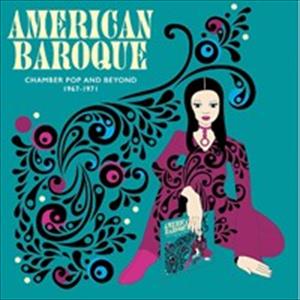
Various Artists / Saint Etienne - American Baroque: Chamber Pop & Beyond 1967-1971
2 LPThe heyday of American baroque pop – or chamber pop - ran from 1966 to the turn of the seventies. It used string quartets, harpsichords and woodwinds to create a summer-into-autumn melancholy that was quite new, and quite far removed from rock’n’roll as Eddie Cochran would have known it. Baroque pop’s musicians often came from a folk background, with an affinity for acoustic instrumentation. Linda Ronstadts first band the Stone Poneys had introduced the autoharp to their line-ups in 1965, while the likes of Bonnie Dobson and Nico experimented with a string quartet’s, searching for different, post-electric Dylan directions. You can trace it back to the Left Banke who created a sound that was soft but insistently sad - where were the guitars? Their guitarist Rick Brand claimed their lyrics "were written as rather self-consciously beautiful musical whimsy, as you find in the latter 18th-century Romantic music, pre-Beethoven". They had a huge hit with ‘Walk Away Renee’ and effectively invented a genre before combusting after just one album. Splinter group Montage produced a very rare album and singer Steve Martin Caro an equally rare single - both are represented on “American Baroque”. Though the baroque sound was quickly forced into a corner by the back-to-basics stance of power trios like Cream and Blue Cheer, many musicians weren’t yet ready to ditch cellos and harpsichords. Some groups like the Blades of Grass aimed their minor key melodies at an early or even pre-teen following. And others like Emmit Rhodes Merry Go Round, H.P. Lovecraft and Appaloosa simply loved the feel of string quartets and woodwinds and continued to explore orchestral pop further, into the early seventies. In doing so, they created this tapestry of delights. There was no single blueprint for the American baroque sound – it could be bordering on the gothic (Russ Giguere of the Association’s extraordinary ‘My Plan’) or as small and precise as a music box (Tom Northcott’s ‘Other Times’).
Select Format
From $23.18
Various Artists / Saint Etienne - American Baroque: Chamber Pop & Beyond 1967-1971—
$23.18
Product Information
Product Information
Shipping & Returns
Shipping & Returns
Description
2 LPThe heyday of American baroque pop – or chamber pop - ran from 1966 to the turn of the seventies. It used string quartets, harpsichords and woodwinds to create a summer-into-autumn melancholy that was quite new, and quite far removed from rock’n’roll as Eddie Cochran would have known it. Baroque pop’s musicians often came from a folk background, with an affinity for acoustic instrumentation. Linda Ronstadts first band the Stone Poneys had introduced the autoharp to their line-ups in 1965, while the likes of Bonnie Dobson and Nico experimented with a string quartet’s, searching for different, post-electric Dylan directions. You can trace it back to the Left Banke who created a sound that was soft but insistently sad - where were the guitars? Their guitarist Rick Brand claimed their lyrics "were written as rather self-consciously beautiful musical whimsy, as you find in the latter 18th-century Romantic music, pre-Beethoven". They had a huge hit with ‘Walk Away Renee’ and effectively invented a genre before combusting after just one album. Splinter group Montage produced a very rare album and singer Steve Martin Caro an equally rare single - both are represented on “American Baroque”. Though the baroque sound was quickly forced into a corner by the back-to-basics stance of power trios like Cream and Blue Cheer, many musicians weren’t yet ready to ditch cellos and harpsichords. Some groups like the Blades of Grass aimed their minor key melodies at an early or even pre-teen following. And others like Emmit Rhodes Merry Go Round, H.P. Lovecraft and Appaloosa simply loved the feel of string quartets and woodwinds and continued to explore orchestral pop further, into the early seventies. In doing so, they created this tapestry of delights. There was no single blueprint for the American baroque sound – it could be bordering on the gothic (Russ Giguere of the Association’s extraordinary ‘My Plan’) or as small and precise as a music box (Tom Northcott’s ‘Other Times’).